
ELVIS IN BROOKSVILLE

Updated: Apr 23
Stories by Robert Martinez

We all remember what we were doing when we heard the news of his death. Today, his fame borders on mythical proportions. This issue recalls his early visits to this area and all the excitement. We were all shook up!
We wish to thank the following who contributed photos and ideas for this issue
Beverly Marsh Hughes
Bobby and Betty Snow
Roger Landers
Dennis Rhodes and Frasier Mountain at the 1885 Depot
Don, David and Bill Whitehead
Leonard Polansky

Why Elvis?
Elvis Presley was the defining figure of rock and roll music. He is the biggest record seller in history. During his lifetime, especially in the 1950s, he was the focal point for the emergence of rock and roll culture, and he made some of the genre's seminal records. Since his death, he has become a pervasive American icon.
William Ruhlmann
Chuck Berry was a better guitarist. Buddy Holly was a better songwriter. Fats Domino had a driving band. Little Richard was even more outrageous. But Elvis codified it together and became the American symbol for rock and roll. His image sold another facet of the American dream to the world. Elvis also paralleled the country's excesses as well. He was a prisoner of his own fame. It is a classic American story, both happy and sad. Elvis was a genuinely good young man. Deeply religious and polite, yet flirting with the Devil's music. His eclectic tastes belied his country roots. He listened to classical, The Ink Spots, Dean Martin, Jazz, show music, and R&B. You can hear those influences. His depth of musical knowledge was amazing. Memphis was the best location for him to assimilate black and white cultures for his unique musical vision. If he had been from Alabama, he would have been too country. From Texas, too honky-tonk. From New York or California, too fabricated. He was the right man at the right place at the right time.
References for "Elvis in Brooksville"
Careless Love: The Unmaking of Elvis Presley by Peter Guralnick
Last Train to Memphis: The Rise of Elvis Presley by Peter Guralnick
The Elvis Atlas by Gray & Osborn
All Music Guide to Rock - Excerpt by William Ruhlmann
Elvis Presley: A Life in Music
(the complete recording sessions) by Ernst Jorgensen
Liner Notes - Elvis Presley CD by Colin Escott
***
Elvis in Brooksville
The Early Days of The King
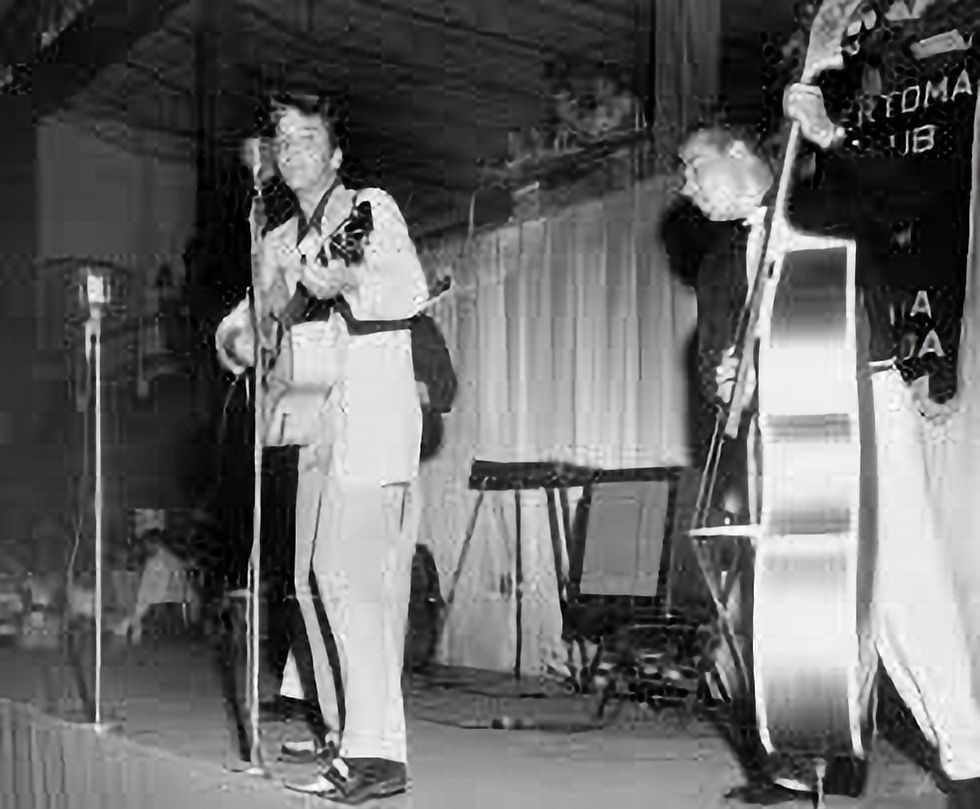
Brooksville bound! Elvis on stage in Tampa (1955). Within two hours he would be in Brooksville
In 1955, Elvis was still a regional sensation. An up-and-coming country music star with a devoted following of mostly teenagers throughout the South. Elvis made his first recordings with Sun Records in 1954 in Memphis. By 1955, his records were on jukeboxes throughout the South and southwest. His personal appearances were electrifying. Adults hated him and called him unflattering names, but teenagers adored him. Elvis's early problem was that he appeared so radically different, so punkish, while shaking his body in a rocking frenzy, that many people didn't realize how good a singer he really was. It's all in the grooves and by 1955 the Oaks Motel Restaurant in Brooksville had Elvis's Sun Records on their jukebox. A popular restaurant with teenagers during the mid-1950s, Beverly Marsh Hughes, whose parents owned the motel recently recalled, "We had six girls who worked there as carhops and they all wanted to go to Tampa to see Elvis, but only three would be able to go. So the girls drew straws and the three shortest straws had to stay and work at the restaurant. Little did they know what was to happen later on."

The Oaks Restaurant in Brooksville in 1955
Elvis was playing two shows at Ft. Homer Hesterly Armory in Tampa on July 31, 1955, winding up his Florida tour. Elvis's schedule was exhausting. Back then they all traveled by car from town to town. July 25th at Ft. Myers, July 26th and 27th in Orlando, July 28th and 29th in Jacksonville, July 30th in Daytona Beach and July 31st in Tampa. He would leave Tampa immediately after his concert, passing through Brooksville at about 11:00-11:30 pm, staying until 2:00 am before departing to the Mississippi-Alabama State Fair in Tupelo, Mississippi. It was non-stop. During the Florida tour, the headliner of the concert was Andy Griffith, who at the time was popular as a folksy comedian with records like "What It Was ... Was Football." Also on the bill were country stars Ferlin Husky and Marty Robbins. Elvis was listed last on the bill, but by this time his new manager, Colonel Tom Parker, realized his boy Elvis was a tough act to follow and instructed the tour to have him finish last, since no entertainer in their right mind would want to follow him. After the concert, Elvis and Andy Griffith and a few others drove north on US 41 and they stopped in Brooksville en-route to Mississippi for the next day's concert. Being all hungry and far from the madding crowd, they stopped at the Oaks Restaurant at about 11:15 pm. Mrs. Hughes remembers "The place was crowded with teenagers, and they were all crazy about him."
The Oaks was originally built around 1929. It consisted of cabins and later became a motel. Located on US 41 Broad, it was in full bloom as Mrs. Hughes recalls. "Andy sat at the counter and ordered a burger, coffee and a slice of pie. Elvis worked the crowd of teenagers there, going from table to table munching on his burger. He would go back to his table and eat some fries, sip his coke and then go back and shake hands and chat with everyone. He was a perfect gentleman ... very polite and very personable. Many people at first had a negative attitude about him ... but he was so charming and well mannered too ... always 'Yes ma'am' and 'No ma'am.' He was really something special. You can tell he had it! Someone played one of his records on the jukebox and he sang along with it. Everyone was in awe. He was dressed in a long sleeve white shirt and blue jeans. They sat around and rested after eating and then they left, must have been around two in the morning. It was a big black car and they drove away. At the time I was really impressed more with Andy since he was more around my age group, but the teenagers were just crazy about Elvis. It's something I'll never forget." Today it seems like a surreal moment or a scene from a retro Broadway play, but for one magic night it was real.

Another view of the Oaks as Elvis and Andy viewed it.
Elvis had stopped earlier in Brooksville on May 10, 1955, stopping for gas at the old Standard Gas Station on East Broad Street, just south of where the rear entrance of the court house is today. On May 8th, he played Tampa, May 9th Ft. Myers and was on his way to Ocala for a concert at the Southeastern Pavillion. Marie Fulgham recalled "My dad ran a gas station there on Broad Street and one day after work he tells me 'Guess who I pumped gas for today ... Elvis Presley.' My dad didn't know who he was at the time being in his forties then, but he figured he must be important since this young man was dressed to kill in a big brand new Cadillac, so he asked him who he was. They talked for a while and he came away realizing that he was really a nice down-to-earth guy."
This was an historic period and turning point in his career. Three days earlier he had played a concert in Daytona Beach and met a local concert publicist named Mae Axton. Axton told Elvis she would write a hit song for him. Later on she read about a man who committed suicide at a Florida motel and left a note saying "I walk a lonely street." It gave her the inspiration to write the song "Heartbreak Hotel" (with songwriter Tommie Durden of Gainesville) which became Elvis' first number one hit and first release for RCA. After Ocala, on May 12-13, his concert in front of 14,000 screaming fans at a baseball field in Jacksonville made national news. The hysteria had begun. Elvis's life was no longer private.

"Down at the end of lonely street," This is Broad Street as it looked in May 1955 when Elvis stopped for gas up the street to the right. He was on his way to Ocala then to Jacksonville, which was the turning point in his career.
It was in Jacksonville where Elvis performed two shows at a baseball park and was mobbed by fans. At the end of one concert he invited all the girls in the crowd of 14,000 backstage. A riot ensued and Elvis's clothes were torn to shreds and police had to restore order. Thousands of girls broke down the barricades and stormed backstage in search of Elvis. It was unbridled passion and pandemonium and the beginning of the Elvis legend. Making national news, it was also the turning point in his career. Later on in July, the same thing almost happened again in Jacksonville. He was getting way too big. Elvis would next play Florida in February and August 1956. By then, his contract had been sold to RCA Records. Slow to catch on nationally, his first RCA single, Heartbreak Hotel, took six weeks to enter the charts. Nervous RCA executives thought they had been duped by the Colonel, but after it did enter the charts in March, by April it was number 1, and Elvis never looked back. He would remain at least in the top five every week for the next two and a half years.

Elvis's first number one hit Heartbreak Hotel (1956)

This is the ad as it appeared in the Tampa Tribune the morning of July 31, 1955. Even though Elvis is nearly last on the bill, by now he was the last act to perform since obviously he was a tough act to follow.
This lineup is the Florida tour. The Tampa concert was sponsored by The Sertoma Club.
Andy Griffith was the headliner. Griffith, nine years older than Elvis, was a recording star as a homespun comedian. It would lead to a TV show on US Steel Hour which showed No Time for Sergeants, later made into a Broadway play, then a movie. He also starred in Elia Kazan's movie "A Face in the Crowd." It would all ultimately lead to his own TV show in 1963 as Sheriff Andy Taylor. Local TV buffs may also remember Ernie Lee, last on the bill. Lee had a daily show at 5 am on Channel 13.

1956 poster for Jacksonville concert
Elvis would tour Florida again in 1956 in February and again in August. By then he was the hottest thing on the planet. Love him or hate him, Elvis did work hard! Here is his Florida schedule for August.
August 3/4 - Miami
August 5 - Tampa
August 6 - Lakeland
August 7 - St. Pete
August 8 - Orlando
August 9 - Daytona Beach
August 10/11 - Jacksonville
***

The Devil's Music and
The Unflattering Florida Press
Teenagers adored Elvis as their own when he first appeared with concerts, records and later on in TV shows such as The Ed Sullivan Show and Steve Allen, but many adults despised him. They labeled him a "sex maniac" or "hood" or as one young black man in Brooksville told me at Hilburn's Record Shop in 1958 ... "That Elvis ... he sure is the devil's child." The local Florida media was mean, cruel and sarcastic. Here are what some of the Florida papers said about Elvis in 1956.
"The nation's best known spastic case."
George Miller, Orlando Evening Star
"America's only male hootchie-cootchie dancer. He wrestled microphones, slunk panther like across the stage with a masculine version of Marilyn Monroe's wiggle in every jerking step, and blasted his feminine-wilting voice into every cranny of the huge armory."
Paul Wilder, Tampa Morning Tribune
"He really is that stupid about what's going on in the world."
Burton Hickman, Miami Herald
"No matter how the teenager's howl, the boy is a show business freak. He'd better save his money while it's pouring in. Chances are in a year or two from now no one will remember him."
Jack Kofoed, Miami Herand
"On stage he is obscene, ridiculous and sullen, yet gets $50,000 a week because of his appearances. Off stage he appears polite and good-natured, only too eager to tell about the way he acts and feels."
Donalee Donaldson, Lakeland Ledger
"A juvenile court judge, Marion Gooding, together with a committee of citizens sat at the back row of the matinee. He ordered Presley to tone down his act for the evening show, and made out warrants for his arrest should he disobey. Presley wiggled only his little finger, but the crowd still went wild."
Jacksonville Times-Union

This famous photo shoot was taken only two hours before Elvis would stop at Brooksville. Taken by Tampa photographers Robertson and Fresh. "Red" Robertson took the picture at Ft. Homer Hesterly, and Fresh worked the dark room. The guitar of Scott Moore would be airbrushed out in this legendary photo. See the next photo and see why.

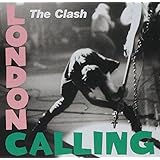
Here it is. The very first album by Elvis Presley to the world released early 1956 by RCA Records. The picture was snapped in Tampa only a couple of hours before his visit to Brooksville. It was for many the first image they had of Elvis all over the world. The cover art has been hailed as one of the greatest covers in history and was imitated by The Clash in 1979 with their London Calling album. The pink and green lettering and stark black and white photo suggests a punkish attitude and urgency to the world. It was the first album to sell one million copies and the first rock album to hit number one. It was number one for 10 weeks and the biggest seller ever for RCA at that time. It was the dawn of a new age. It was Elvis!
***
The Return of Elvis
Contrary to what the early cynics and critics of Elvis said, his fame did not wane. Instead his legend grew even more. One of the biggest nights in Brooksville history was the re-opening of the Dixie Theatre on the evening of January 1, 1958. The picture was Jailhouse Rock with Elvis and there were cars everywhere downtown, everyone hoping to get in to see the popular film. The Dixie Theatre would sell out every night the entire week the movie was on. Elvis entered the Army later that year and did not return until April 1960. On July 30, 1961, nearly 5,000 fans stood in the hot sun at Weeki Wachee to get a glimpse of "The King." The local newspaper, The Sun Journal, reported that "Elvis was very gracious to the large crowd and kissed some of the girls on the cheek, which brought great reactions, screams and even swoons."
He arrived in Weeki Wachee from Crystal River where he was on location for his next movie, Follow That Dream, shot in Citrus County. He requested to see the mermaids at Weeki Wachee and word got out. Don Whitehead recalled "When we saw him, he was wearing a black suit with a white shirt and tie which was unusual considering the late July heat. He shook my hand and said 'Hi'. He had a firm grip. I'll never forget that."

Elvis mingles with the crowd at Weeki Wachee
Leonard Polansky recalls as he was working at his dad's Sinclair gas station in Weeki Wachee that Sunday afternoon at the corner of US 19 and 50 (where the Holiday Inn would be built in 1967) when late in the day around 5 pm, a large, long Cadillac pulled into the station. "I spoke to the chauffeur and then peeked into the back seat and said 'Holy .....". I was awestruck. It was Elvis sitting together with Tuesday Weld, famed actress. (Elvis was dating her at the time). I was too stunned to say much of anything. I filled up his caddy, wiped the windows and thanked them. And then they drove off. I'm sure I turned pale. How could you ever forget something like that?"

Elvis and Tuesday Weld in "Wild in the Country"

The gas station Elvis pulled into on Sunday afternoon at Weeki Wachee in 1961. The station was owned by Stephen Polansky. (From the Brooksville 1961 phone book)
Elvis would not visit this area again until March 1970, when he performed two sold-out concerts at Tampa's Curtis Hixon Hall. He was still superb, but in three years there began a slow decline. A myriad of problems along with his Howard Hughes reclusive lifestyle, all played a part in his sad ending. But his great voice never faltered. We all remember what we were doing when we heard the news of his passing on August 16, 1977. Younger, cynical attitudes tried to destroy his image during the 1980s, but he ultimately prevailed even in death. The voice many took for granted at first and ignored because they focused on the shaking, his sex appeal, his clothes, and all the hysteria, was what lived on. From the very beginning until the end, he had an excellent voice. That's why his recordings still hold up today. He was just a natural god-given talent who changed the course of popular music around the world. Like Thomas Edison, Walt Disney, Babe Ruth, Louis Armstrong and Henry Ford, Elvis was truly an American icon.

Elvis with two Weeki Wachee mermaids during his visit here in 1961. To the left is Bonita Colson and right, Naomi Roll. Elvis was filming Follow That Dream in Citrus County and took Sunday afternoon off to see the attractions. Nearly 5,000 fans arrived.
***
Colonel Tom Parker's ties to this area

Manager Colonel Tom Parker and Elvis after a Tampa concert in 1957
Colonel Tom Parker in my opinion was the greatest salesperson who ever lived. He was the guiding light of Elvis's career and the first manager to cover every aspect of an artist's involvement in profit and details in organization and concert promotion. Before the Colonel, concert bookings were loose affairs. The Colonel, however, wanted specific information on hotels, ticket pricing, seating capacity, souvenirs, programs and would wring every penny possible for his client. A shrewd taskmaster, he was the one who moved Elvis from small Sun Records to RCA in December 1955 for an unheard of sum of $40,000, yet few know of his local Tampa roots. Orphaned as a child, he wound up in Tampa around 1932 and later joined the Royal American Circus Shows as a carney and also worked for the Tampa Humane Society as, he said, "Chief Dogcatcher." He married Marie Mott in Tampa in 1935, and dabbled in concerts, taking the Florida tours for Roy Acuff and Gene Austin. Around 1944, he met Eddy Arnold and began his management. He then moved to Nashville and later on met Elvis.
The Colonel did not forget his Tampa roots and had contacts with Tampa radio station WHBO. In 1970, while I was promoting a concert in Tampa for Steve Miller/Crow, the box office manager, Mr. Ray Manley, called me and said "Hey kid ... the Colonel would like two tickets for your next show for a couple of his young relatives." In return, the Colonel left me two choice tickets for Elvis's September concert at Curtis Hixon Hall.
The Colonel lived and breathed show business. Once when Eddy Arnold asked him "Colonel, you work hard, you made good money. Why don't you get yourself a hobby like golf or boating?" The Colonel looked back at Arnold and said "You are my hobby, son. You are my hobby."
He was an inspiration to every promoter and left no stone unturned. Many considered his complete control stifling to Elvis's career, especially in movies. But there is no doubt, he made a lot of money for his client and himself. He died in 1997 at the age of 87.
***

The Greatest Elvis Records of All Time!
That's All Right Mama - 1954 (first record)
Mystery Train - 1955
Baby Let's Play House - 1955
Don't Be Cruel/Hound Dog - 1956
Heartbreak Hotel/I Was the One - 1956
I Want You, I Need You, I Love You/My Baby Left Me - 1956
Blue Suede Shoes - 1956
Paralyzed - 1956 (album cut)
All Shook Up -1957
Teddy Bear - 1957
Don't/I Beg of You - 1958
Hard Headed Woman - 1958
A Fool Such as I/I Need Your Love Tonight - 1959
A Big Hunk O Love - 1959
Stuck on You - 1960
Are You Lonesome Tonight?/I Gotta Know - 1960
It's Now or Never - 1960
Can't Help Falling in Love With You/Rock-a-Hula Baby - 1961
Little Sister/Marie's The Name of His Latest Flame - 1961
Return to Sender - 1962
She's Not You - 1962
You're The Devil in Disguise - 1963
Crying in The Chapel - 1965
Suspicious Minds - 1969
Kentucky Rain - 1970
Burning Love - 1972



Comments